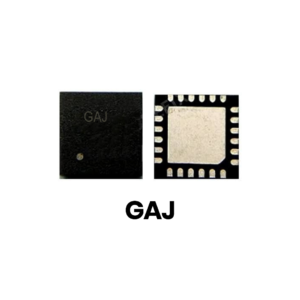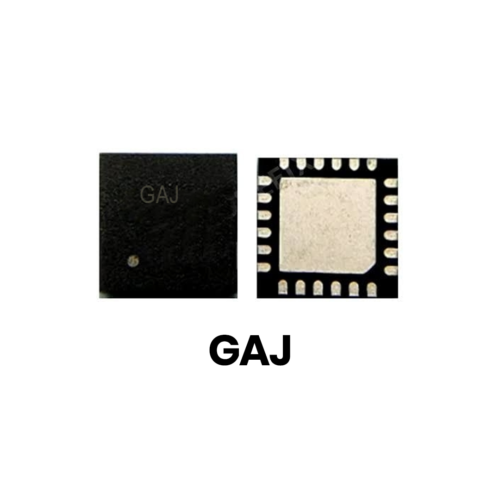
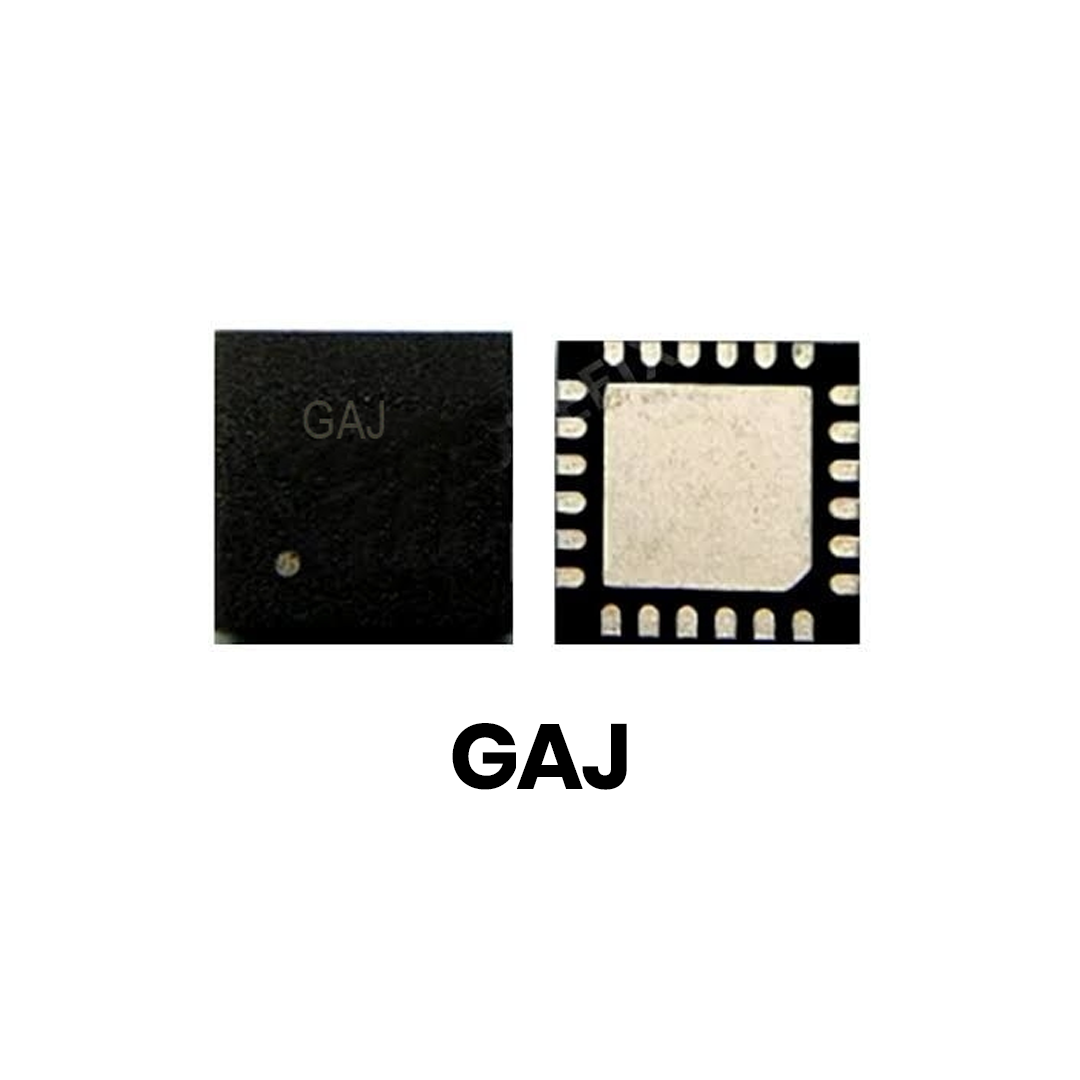
GAJ Mobile Phone IC
High-Performance Mobile IC
Experience seamless functionality with the GAJ Mobile Phone IC, a cutting-edge solution designed to enhance the performance of your mobile devices. Engineered with precision, this IC ensures optimal responsiveness, making it ideal for modern mobile requirements. GAJ Mobile Phone IC
Exceptional Durability
The GAJ Mobile Phone IC offers outstanding durability, ensuring consistent performance even under extended usage. Its robust design and superior quality materials make it a trusted component for demanding environments. GAJ Mobile Phone IC
Perfect for Modern Smartphones
Achieve better efficiency and reliability in your smartphone designs with the GAJ Mobile Phone IC. Its integration capabilities and compatibility with a wide range of devices ensure a seamless experience, empowering innovative mobile solutions. GAJ Mobile Phone IC
1. Core Mobile IC Categories and Roles
Before looking at specific part numbers, it is essential to understand the “Big Four” ICs that govern a modern smartphone’s motherboard. GAJ Mobile Phone IC
| IC Category | Primary Function | Common Symptoms of Failure |
| CPU (Application Processor) | The “Brain.” Processes all data and system commands. | Phone stuck on logo, completely dead, or “CPU overheating” errors. |
| PMIC (Power Management IC) | Distributes specific voltages ($V_{dd}$, $V_{core}$) to all other chips. | Charging issues, no power, or specific hardware (like the camera) not working. |
| RF IC (Radio Frequency) | Manages 4G/5G, Wi-Fi, and Bluetooth signals. | “No Service,” “Searching,” or Wi-Fi toggle grayed out. |
| EMMC / UFS (Memory IC) | Stores the Operating System and user data. | Encrypting errors, “Internal Storage Corrupted,” or boot loops. |
2. GAJ Series: Detailed IC Specifications
The following table highlights the specifications for the Qualcomm and MediaTek PMICs most frequently associated with the “GAJ” naming convention in repair circles (e.g., PMI632, PM8953, MT6357).
| IC Model Number | Manufacturer | Type | Input Voltage (Vbat) | Key Features |
| PMI632 (902/502) | Qualcomm | Secondary PMIC | 3.7V – 4.4V | Integrated USB Type-C support, Quick Charge 3.0, Flash/Torch driver. |
| PM8953 | Qualcomm | Main PMIC | 3.2V – 4.5V | Supports Octa-core processors, manages 20+ LDO (Low Dropout) regulators. |
| MT6357V / CRV | MediaTek | Main PMIC | 3.4V – 4.4V | Optimized for Helio P-series, high-efficiency buck converters for GPU power. |
| WTR3925 | Qualcomm | RF Transceiver | 1.8V / 1.2V | Global LTE support, Carrier Aggregation, GPS/GLONASS integration. |
| SMB1351 | Qualcomm | Charging IC | 5V / 9V (Input) | Dedicated fast-charging controller used in mid-range flagships. |
3. Physical & Technical Architecture
Modern mobile ICs use BGA (Ball Grid Array) technology. Unlike older chips with “legs” (pins) on the sides, these have microscopic solder balls underneath.
Ball Grid Array (BGA) Specs:
-
Pitch Size: Usually 0.35mm to 0.4mm (the distance between the centers of two solder balls).
-
Ball Count: Can range from 30 balls (for a simple Audio IC) to over 1000 balls (for a flagship CPU).
-
Mounting: Requires an SMD Rework Station set to approximately 330°C to 350°C for removal or “reballing.”
4. Troubleshooting the Power Section (GAJ/PMI)
When a technician identifies a “GAJ” or Power IC as the culprit, they typically follow this diagnostic workflow:
-
VPH_PWR Check: Ensure the main system voltage ($V_{ph}$) is reaching the IC. If this is 0V, the IC cannot boot the phone.
-
LDO Voltages: Check for the 1.8V and 2.8V outputs. These are “Always On” voltages required for the Power Button to function.
-
Clock Signal: The PMIC must receive a 19.2 MHz or 26 MHz signal from the Crystal Oscillator to synchronize data.
5. Summary Table for Repair Technicians
| Symptom | Suspected IC | Action |
| Dead (0.01A-0.05A Draw) | Main PMIC (PM8953/MT6357) | Check Crystal Oscillator & Reset Line |
| Fake Charging | Charging IC / Secondary PMIC | Check USB CC1/CC2 lines and OVP (Over Voltage Protection) |
| No Sound/Mic | Audio Codec IC | Check $V_{dd}$ Audio (usually 1.8V) |
| Baseband Unknown | RF Transceiver (WTR series) | Reball or replace the RF IC |
Note: Always use a schematic diagram (like Borneo Schematics or DZKJ) to verify the exact part number before attempting a replacement, as many ICs look identical but have different firmware (e.g., PMI632-902 is NOT compatible with PMI632-502).
More Products : https://gaffarmarketdelhi.com