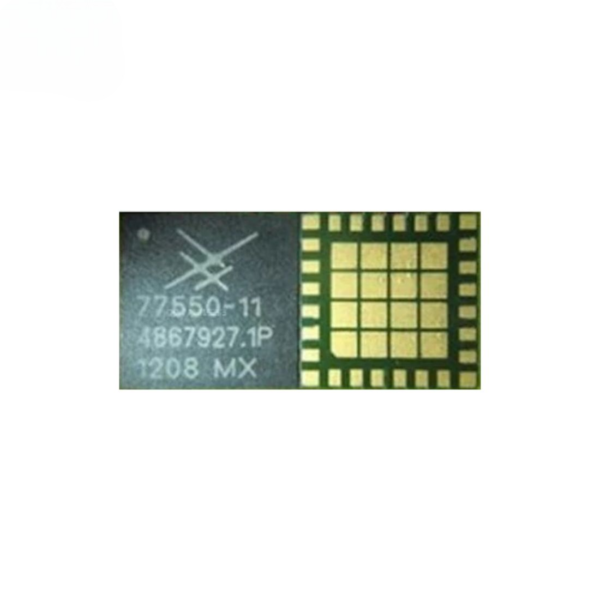
77550-11 Mobile Phone IC
Advanced Technology for Superior Performance
The 77550-11 Mobile Phone IC is designed to elevate your mobile device’s performance with advanced functionality and reliability. Engineered with cutting-edge technology, this integrated circuit seamlessly handles complex tasks in communication, processing, and power management, making it an essential component for modern mobile devices. Whether it’s enabling faster data processing or optimizing energy consumption, the 77550-11 Mobile Phone IC ensures an enhanced user experience.
Optimized Design for Efficiency and Durability
Efficiency is paramount in today’s mobile devices, and the 77550-11 Mobile Phone IC delivers with its optimized design and robust architecture. Its compact size allows it to integrate seamlessly within diverse mobile phone models, catering to end-users who demand performance without compromising on reliability. The IC’s durability and resilience also ensure it withstands prolonged usage and varying operational conditions. With this product, you can guarantee your mobile phone operates smoothly, meeting the demands of both casual and power users alike.
Perfect for Developers and Manufacturers
If you’re a mobile phone manufacturer or developer looking for an IC that combines performance with versatility, the 77550-11 Mobile Phone IC is the perfect choice. It supports a wide range of functionalities, from enhancing signal processing to boosting energy efficiency. The adaptability of this IC makes it highly suitable for both mid-range and high-end mobile phones. Additionally, its adherence to global standards ensures compatibility across multiple devices, making it a trusted component in the mobile technology industry.
The 77550-11 Mobile Phone IC is more than a product—it’s a solution that addresses the advancing needs of mobile connectivity and processing. Invest in your mobile device’s performance today with a reliable IC that delivers long-term value.
The 77550-11 is a high-integration Radio Frequency (RF) Front-End Power Amplifier Module (PAM).1 In the architecture of a mobile device, this IC acts as the primary transmission engine, taking the weak signals processed by the transceiver and boosting them to the power levels necessary for clear communication with cellular base stations.2
It is specifically designed for high-efficiency operation in 4G LTE and 3G networks, often found in devices utilizing Qualcomm Snapdragon platforms.3
1. Architectural Design
The 77550-11 is part of a modern generation of “Multimode Multiband” (MMMB) modules. This means that instead of having a separate chip for every frequency band, this single module integrates multiple amplification paths.
-
Integrated Switching: It includes high-throw count switches that allow the phone to jump between different frequency bands (like Band 1, 3, or 40) almost instantly.
-
Low-Noise Amplifiers (LNA): While its primary job is transmission, these modules often include or interface with LNAs to help clean up incoming signals from the tower.
-
MIPI RFFE Control: The IC is controlled digitally via the MIPI (Mobile Industry Processor Interface) Radio Frequency Front End (RFFE) bus. This allows the phone’s CPU to adjust the power level and frequency mode thousands of times per second to save battery life.
2. Technical Specifications
| Feature | Details |
| Type | Power Amplifier Module (PAM) |
| Technology | GaAs (Gallium Arsenide) HBT |
| Bands Supported | Multiband (supporting LTE FDD/TDD and WCDMA) |
| Control Interface | MIPI RFFE |
| Matching | Internal 50 $\Omega$ matching (No external tuning required) |
| Efficiency Support | Average Power Tracking (APT) & Envelope Tracking (ET) |
3. Key Performance Features
The 77550-11 is built using Gallium Arsenide (GaAs) technology. GaAs is more expensive than standard silicon but is far more effective at handling high-frequency radio waves without losing energy as heat.
-
Power Tracking: It supports advanced power-saving technologies like Envelope Tracking (ET). This allows the IC to consume only as much power as the signal actually needs at that microsecond, rather than running at “full throttle” all the time, which significantly extends battery life during heavy data usage.
-
Compact Footprint: To fit into thin modern smartphones, the 77550-11 is designed in a very low-profile Land Grid Array (LGA) package, taking up minimal space on the motherboard.
4. Troubleshooting and Repair
In professional mobile repair, the 77550-11 is a common point of failure because it handles high electrical current and generates the most heat of any component in the RF section.
Common Symptoms of a Faulty 77550-11:
-
“No Service” or “Searching” Errors: The phone can receive signals but cannot “talk” back to the tower.
-
Weak Signal: The device only gets bars when standing very close to a cell tower or router.
-
Short Circuit: Because this IC is connected to the main battery line (VCC_MAIN), a short inside the chip will prevent the phone from turning on entirely.
-
Excessive Heat: If the phone becomes hot specifically near the camera or upper-back area during calls, this IC may be failing.
5. Professional Installation
Replacing this IC requires advanced microsoldering. Technicians must use a hot air station set to approximately 340°C–360°C with high-quality flux. Because it is a multi-chip module, it is sensitive to “popcorning” (internal damage) if heated for too long or at too high a temperature.
More Products : https://gaffarmarketdelhi.com