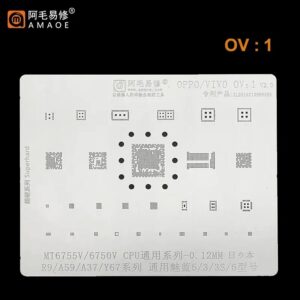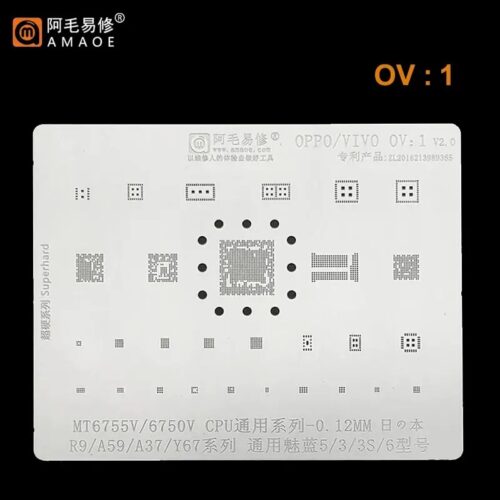
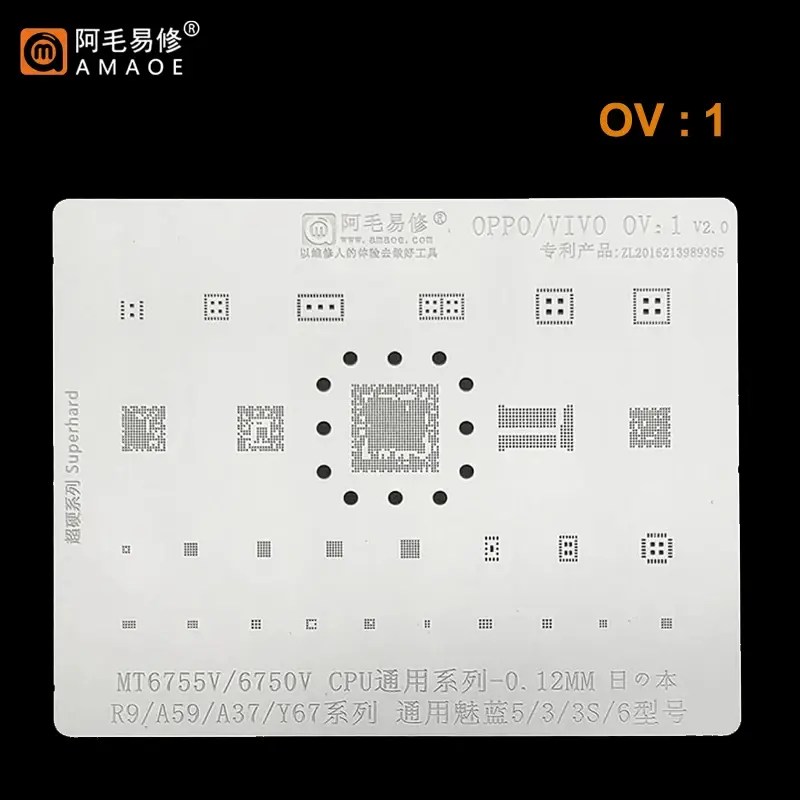
Amaoe OV1 BGA Reballing Stencil-Original
High-Quality Reballing Solution
The Amaoe OV1 BGA Reballing Stencil-Original is designed to deliver precision and consistent results for all your micro-soldering needs. Crafted from durable, original materials, this stencil ensures long-term reliability and ease-of-use, making it ideal for professionals and hobbyists alike. Amaoe OV1 BGA Reballing Stencil-Original
Effortless Precision and Versatility
This reballing stencil empowers users with seamless alignment during BGA reballing processes. Its accurate grid layout and compatibility with various chip sizes enhance efficiency, ensuring error-free outcomes. Whether you’re working on mobile repairs, PCB assembly, or other intricate electronics tasks, this stencil is invaluable to achieving flawless results. Amaoe OV1 BGA Reballing Stencil-Original
An Essential Tool for Experts
Compact and easy to use, the Amaoe OV1 BGA Reballing Stencil is perfect for handling delicate electronic parts. Its robust design minimizes deformation and guarantees repeatable accuracy, catering to your most demanding project requirements. Experience unparalleled precision with this trusted tool. Amaoe OV1 BGA Reballing Stencil-Original
The Amaoe OV1 BGA Reballing Stencil is a high-precision repair tool specifically engineered for technicians working on OmniVision (OV) camera sensors and related mobile imaging hardware. Amaoe is widely regarded in the microsoldering community for its “Square Hole” design, which prevents solder balls from getting stuck during the stencil removal process. Amaoe OV1 BGA Reballing Stencil-Original
Below are the comprehensive specifications and features for the OV1 model. Amaoe OV1 BGA Reballing Stencil-Original
Technical Specifications Table
| Feature | Specification |
| Brand | Amaoe (Authentic/Original) |
| Model Number | OV1 (OmniVision Series) |
| Material | High-Grade Imported Japanese Steel |
| Hole Type | Square Hole (CNC Laser Cut) |
| Thickness | 0.12mm – 0.15mm (Optimized for thermal stability) |
| Application | BGA Reballing for Camera Sensors & ICs |
| Compatibility | Various OmniVision (OV) Image Sensors |
| Heat Resistance | High (Anti-drumming/Anti-warping) |
| Finish | Smooth, Burr-free edges |
Core Features & Design Advantages
The Amaoe OV1 is more than just a piece of sheet metal; it is designed to handle the delicate thermal requirements of image sensors, which are notoriously sensitive to heat.
-
Square Hole Technology: Unlike traditional round-hole stencils, Amaoe uses square apertures. This design allows the solder paste to form more consistent spheres and ensures that once the solder has melted and cooled slightly, the stencil can be lifted without pulling the “balls” off the pads. Amaoe OV1 BGA Reballing Stencil-Original
-
Precision Alignment: The stencil features CNC-etched markings and precise hole spacing (pitch) that matches the original factory BGA patterns of OV sensors. This reduces the margin of error for professional technicians. Amaoe OV1 BGA Reballing Stencil-Original
-
Thermal Stability: The Japanese steel used in the OV1 is specifically treated to resist “bowing” or “drumming” when heat is applied. This ensures the stencil stays flat against the chip, preventing solder bridges. Amaoe OV1 BGA Reballing Stencil-Original
Supported Components (Typical for OV1)
The OV1 version generally covers a specific range of image processing chips and camera sensors frequently found in Android smartphones (Huawei, Xiaomi, OPPO, etc.). These include:
-
OV Series Sensors: Various iterations of the OmniVision high-resolution sensors. Amaoe OV1 BGA Reballing Stencil-Original
-
Small-scale Power ICs: Occasionally, these stencils include footprints for supporting camera power management chips. Amaoe OV1 BGA Reballing Stencil-Original
Best Practices for Use
To get the most out of your Amaoe OV1 stencil and ensure longevity, follow these professional guidelines:
-
Cleaning: Always clean the stencil with 99% Isopropyl Alcohol (IPA) after every use. Solder paste residue in the square holes can dry out and cause blockages in future repairs.
-
Paste Application: Use a high-quality “no-clean” solder paste (usually 183°C or 138°C depending on the component sensitivity). Apply with a firm, flat spatula to ensure even filling of the square holes.
-
Heat Management: Use a nozzle on your hot air station that covers the entire area of the chip. Apply heat in a circular motion to avoid localized warping.
Note: Always verify the specific chip model on your board against the stencil layout, as manufacturers sometimes update IC footprints between different hardware revisions.
More Products : https://gaffarmarketdelhi.com