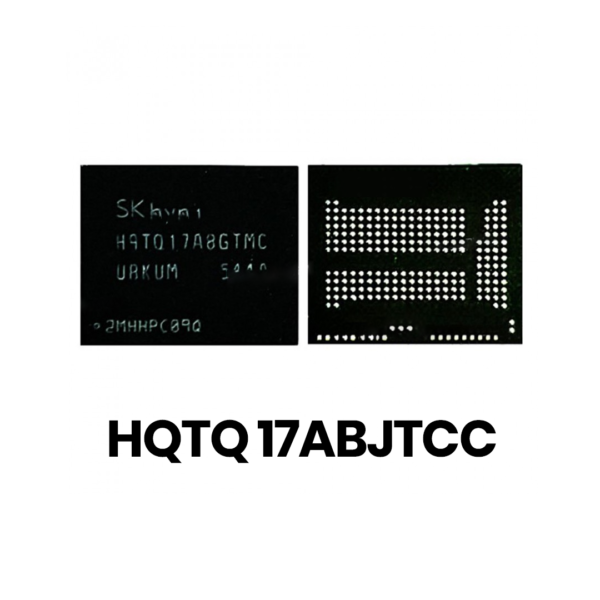
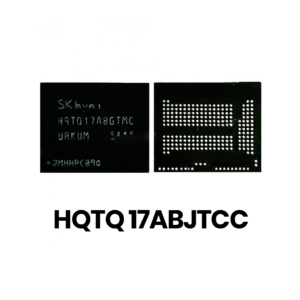
HQTQ 17ABJTCC EMMC BGA 221 Mobile Phone IC
Unlock seamless mobile phone performance with the HQTQ 17ABJTCC EMMC BGA 221 Mobile Phone IC. This versatile component ensures efficient storage capabilities and smooth functionality for your devices. HQTQ 17ABJTCC EMMC BGA 221 Mobile Phone IC
Exceptional Storage Efficiency
Engineered to support cutting-edge technologies, the HQTQ 17ABJTCC EMMC BGA 221 IC delivers remarkable data transfer speeds and storage reliability. It’s the ultimate solution for mobile manufacturers and repair professionals. HQTQ 17ABJTCC EMMC BGA 221 Mobile Phone IC
Compact and Durable Design
Designed in a compact BGA 221 form factor, this IC fits perfectly into modern mobile phones. Its durable build ensures long-term performance even in challenging environments. HQTQ 17ABJTCC EMMC BGA 221 Mobile Phone IC
Streamlined Integration
Enjoy hassle-free integration with various mobile models. The HQTQ 17ABJTCC EMMC IC simplifies upgrading or replacing devices, ensuring compatibility with the latest technologies in the market. HQTQ 17ABJTCC EMMC BGA 221 Mobile Phone IC
Equip your mobiles with the HQTQ 17ABJTCC EMMC BGA 221 IC for exceptional performance and longevity. HQTQ 17ABJTCC EMMC BGA 221 Mobile Phone IC
The HQTQ 17ABJTCC (often identified in technical catalogs as the SK Hynix H9TQ17ABJTCC) is a high-performance eMCP (embedded Multi-Chip Package) commonly found in mid-range Android smartphones.
This specific IC is a “2-in-1” storage solution, combining eMMC (embedded Multimedia Card) flash memory and LPDDR3 (Low Power Double Data Rate) RAM into a single BGA 221 package. This integration saves significant space on the mobile motherboard (PCB).
Technical Specifications: HQTQ 17ABJTCC (BGA 221)
| Feature | Specification Details |
| Manufacturer | SK Hynix |
| Part Number | H9TQ17ABJTCC / HQTQ 17ABJTCC |
| Package Type | BGA 221 (Ball Grid Array with 221 solder balls) |
| Device Type | eMCP (Multi-Chip Package: eMMC + LPDDR3) |
| eMMC Capacity | 16 GB (NAND Flash) |
| RAM Capacity | 16 Gb (2 GB) LPDDR3 SDRAM |
| eMMC Standard | v5.0 / v5.1 |
| Bus Width | x8 bit (eMMC) / x32 bit (LPDDR3) |
| Voltage (VCC) | 2.7V – 3.6V |
| Voltage (VCCQ) | 1.7V – 1.95V / 1.14V – 1.3V |
| Operating Temperature | -25°C to +85°C |
| Dimensions | Approx. 11.5mm x 13mm x 1.0mm |
Key Features & Functional Description
1. The BGA 221 Architecture
The BGA 221 footprint is a standard layout for eMCP chips. It features 221 pins (solder balls) arranged in a grid that facilitates high-speed data transfer between the memory and the processor (CPU). Because both RAM and Flash are in the same physical chip, the “trace length” on the circuit board is minimized, leading to better power efficiency and faster response times.
2. Embedded Multimedia Card (eMMC)
The 16GB storage section acts as the phone’s “hard drive.” It stores the Android Operating System, system applications, and user data (photos, videos).
-
Performance: Typically supports HS400 speeds (up to 400MB/s theoretical bandwidth), ensuring the phone boots quickly and apps launch without significant lag.
-
Reliability: Includes an internal controller that manages “Wear Leveling” and “Bad Block Management,” preventing the memory from wearing out too quickly from repeated writes.
3. LPDDR3 SDRAM
The 2GB RAM component is used for active tasks.
-
Multitasking: 2GB is the “sweet spot” for budget to mid-range devices, allowing several apps to remain open in the background.
-
Power Efficiency: Being “Low Power” (LP), it is designed to enter deep-sleep modes when the phone is idle, significantly extending battery life.
Pinout and ISP (In-System Programming)
For mobile technicians and data recovery specialists, the ISP Pinout is the most critical aspect of the BGA 221. ISP allows you to connect to the IC using a box (like UFI, EasyJtag, or Medusa) without desoldering the chip.
Primary ISP Connection Points:
-
DAT0: Data line for bit-stream transfer.
-
CMD: Command line for sending instructions to the controller.
-
CLK: Clock signal to synchronize data.
-
VCC & VCCQ: Power supply lines (usually 2.8V and 1.8V).
-
GND: Ground reference.
Common Usage and Troubleshooting
This IC is widely used in brands like Xiaomi (Redmi), Oppo, Vivo, and Samsung (J-series/M-series).
Common Failure Symptoms:
-
Stuck on Logo: The eMMC “User Area” may be corrupted or has reached its end-of-life (EOL). HQTQ 17ABJTCC EMMC BGA 221 Mobile Phone IC
-
Encryption Error: The data partition is damaged, often requiring a factory reset or chip “re-partitioning” via a JTAG box. HQTQ 17ABJTCC EMMC BGA 221 Mobile Phone IC
-
90% Consumed Error: A common report in UFI Box indicating the NAND flash cells are physically worn out. HQTQ 17ABJTCC EMMC BGA 221 Mobile Phone IC
Repair Strategy:
If the IC is physically healthy but the software is corrupted, technicians use Dump Files (ROM1, ROM2, ROM3) to re-flash the bootloader. If the chip is dead, it must be replaced with a matching BGA 221 IC, followed by a “CPID” or “IMEI” repair depending on the device’s security architecture.
More Products : https://gaffarmarketdelhi.com