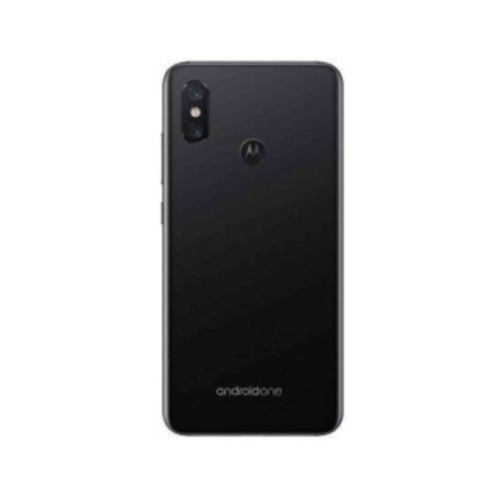
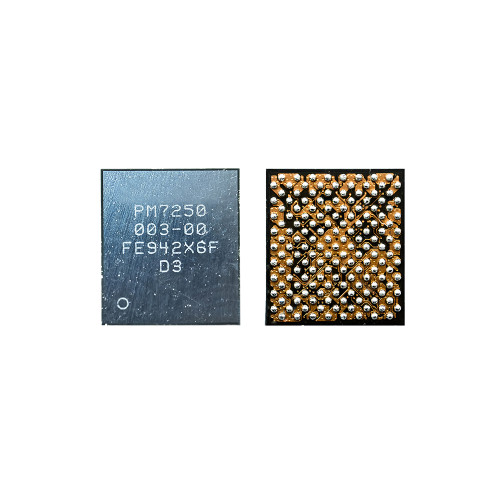
Mobile Phone IC For PM7250 Original
PM7250 Original Technical Specifications
The following table summarizes the key electrical and mechanical specifications of the original PM7250 161-pin variant.
| Feature / Parameter | Original Specification |
| Manufacturer | Qualcomm Technologies, Inc. |
| Package Type | 161-pin FOWPSP (Fan-Out Wafer Level Picoscale Package) |
| Package Dimensions | 4.40 mm × 5.07 mm × 0.54 mm |
| Input Voltage Range | 3.0V to 5.5V (Standard Li-ion range) |
| Output Rails | Multi-rail (Supports Buck Converters and LDOs) |
| Max Output Current | Up to 3.0A per High-Current Channel |
| Switching Frequency | ~1.0 MHz (Typical for Buck Converters) |
| Efficiency | > 90% under typical load conditions |
| Communication Bus | SPMI (System Power Management Interface) |
| Operational Temp Range | -40°C to +125°C |
| Protection Mechanisms | OVP (Over-Voltage), UVP (Under-Voltage), OTP (Thermal Shutdown) |
Key Functional Blocks
The PM7250 is more than a simple regulator; it serves as the “nervous system” for a phone’s power distribution.
1. High-Efficiency Voltage Regulation2
The IC integrates multiple Step-Down (Buck) Converters and Low Dropout (LDO) regulators. These rails are essential for:
-
VDD_CORE: Delivering precise, low-voltage power to the CPU cluster.3
-
VDD_GPU: Supporting the Adreno graphics processor during high-load gaming.
-
VDD_LPDDR: Providing stable 1.1V or 0.6V rails for the device’s RAM.
2. Intelligent Thermal Management
A standout feature of the PM7250 is its Smart Thermal Control.4 It includes a multi-stage thermal protection system:5
-
Stage 1 (95°C): Sends an interrupt signal to the processor to trigger software-level throttling.
-
Stage 2 (115°C): Increases the urgency of the interrupt to force immediate cooling.
-
Stage 3 (>145°C): Executes an emergency Thermal Shutdown to prevent physical damage to the silicon die.6
3. System Housekeeping
The PM7250 manages critical background tasks, including:
-
Clock Generation: Includes a 19.2 MHz / 38.4 MHz Crystal Oscillator (XO) controller for system timing.
-
Real-Time Clock (RTC): Maintains time and alarm functions even when the phone is powered off, provided the battery is connected.
-
ADC Monitoring: Integrated Analog-to-Digital converters monitor battery voltage, current, and temperature ($XO\_THERM$) in real-time.