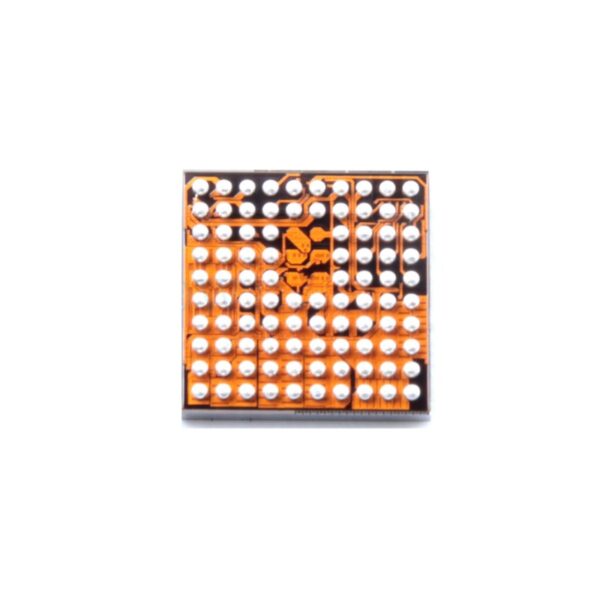
MT 6197W Mobile Phone IC
Enhance Mobile Functionality with the MT 6197W
The MT 6197W Mobile Phone IC is an advanced integrated circuit designed to meet the demands of contemporary mobile devices. Whether you are an electronics enthusiast, manufacturer, or technician, this cutting-edge component is a reliable solution for optimizing mobile performance. Compact yet highly functional, the MT 6197W ensures enhanced operational efficiency while reducing power consumption, making it ideal for modern smartphone designs. MT 6197W Mobile Phone IC
Exceptional Features and Performance
Engineered for efficiency, the MT 6197W Mobile Phone IC boasts outstanding features that set it apart in the industry. It excels in delivering precise signal processing, connectivity support, and seamless integration with other components. This IC is developed to meet the needs of high-speed communication systems, ensuring reliability and functionality even in high-demand applications. Whether facilitating fast data transfer or maintaining stable frequencies, the MT 6197W delivers consistent and exceptional performance every time.
Applications and Versatility
The MT 6197W Mobile Phone IC is versatile and suitable for diverse applications across the mobile and electronics sectors. Its compact design makes it a go-to choice for space-constrained devices. It is compatible with most modern mobile phone architectures and can be integrated into smartphones, tablets, and wearable technologies. Additionally, its low power requirements make it a sustainable option, contributing to the overall energy efficiency of the devices in which it is used.
Technical Advantages and Superior Quality
In addition to functionality, the MT 6197W is crafted with quality and durability in mind. Manufactured using the latest semiconductor technologies, it ensures a long life cycle and minimal risk of malfunction. Its robust construction resists heat and stress, ensuring reliable performance across varied environments. For product manufacturers or engineers, choosing the MT 6197W Mobile Phone IC means investing in both innovation and quality assurance.
Transform Your Devices with the MT 6197W
When it comes to enhancing mobile device capabilities, the MT 6197W delivers an unparalleled solution. Ideal for a broad spectrum of uses, it provides dependable performance and compatibility that fit the needs of today’s fast-evolving markets. Whether you’re designing a new mobile device or repairing existing hardware, the MT 6197W Mobile Phone IC offers the ideal blend of efficiency, quality, and innovation.
The MT6197W is a highly integrated, high-performance RF (Radio Frequency) Transceiver IC developed by MediaTek. Introduced around 2019, it is a critical component in the cellular subsystem of modern mid-range 4G LTE and 5G smartphones. It serves as the bridge between the digital baseband processor (the modem) and the analog front-end (antennas and power amplifiers).
Below is a detailed technical description of the MT6197W, its architecture, and its role in mobile devices. MT 6197W Mobile Phone IC
1. Primary Function and Architecture
The MT6197W acts as an Intermediate Frequency (IF) Transceiver. Its primary job is to convert low-frequency digital data from the phone’s processor into high-frequency radio waves for transmission, and vice versa for receiving signals. MT 6197W Mobile Phone IC
-
Down-conversion (Receiver): It takes high-frequency signals from the antenna, filters them through a Low Noise Amplifier (LNA), and down-converts them to a baseband frequency that the CPU can understand. MT 6197W Mobile Phone IC
-
Up-conversion (Transmitter): It takes digital data, modulates it, and shifts it to the required cellular frequency (e.g., 1800MHz or 2100MHz) before sending it to the Power Amplifier (PA) for transmission.
2. Key Technical Specifications
The MT6197W is an evolution of older models like the MT6177, offering significantly better data throughput and power management.
-
Technology Support: It supports multi-mode operations, including GSM, WCDMA (3G), and LTE (4G). It is also frequently found in 5G NR (New Radio) FR1 designs, where it handles the sub-6GHz frequency bands.
-
Carrier Aggregation (CA): One of its standout features is support for 3-way Carrier Aggregation. This allows the phone to combine three different frequency bands simultaneously to achieve much higher download speeds (up to 40 MHz bandwidth).
-
Package Type: It typically comes in a 64-pin QFN (Quad Flat No-leads) package. This design is preferred for mobile devices because it has a very low profile and an exposed thermal pad underneath for efficient heat dissipation.
-
Operating Voltage: It generally operates on a 1.8V VDD_RF rail, with high precision required to maintain signal integrity.
3. Implementation and Compatibility
You will find the MT6197W in a wide array of popular smartphones, particularly those using MediaTek Dimensity or Helio chipsets. Common devices include:
-
Samsung: Galaxy A32, A15 5G, A16 5G.
-
Xiaomi/Poco: Redmi 9, Redmi 13C 5G, Poco X6 Pro.
-
Motorola: Edge 50 Neo.
It is often paired with the MT6377W (Power Management IC) and specific MediaTek CPUs to form a complete “platform” reference design.
4. Common Failure Symptoms
Because the MT6197W handles all network communication, a fault in this IC usually results in “Network Death.” Common symptoms include:
-
No Service / Searching: The phone shows “No Service” even with a valid SIM card.
-
Radio Off: In the phone’s software settings, the “Radio” status may show as permanently off or unavailable.
-
IMEI/Baseband Unknown: If the IC fails to initialize, the phone may report “Unknown Baseband” in the ‘About Phone’ menu.
-
High Battery Drain: A partial short inside the IC can cause the RF section to overheat, leading to rapid battery depletion even when the phone is idle.
5. Repair and Handling
Replacing the MT6197W is a complex task involving BGA reballing. Since it is a QFN/BGA chip, it requires a hot air rework station set to approximately 260°C – 300°C. Technicians must be careful with the VCO (Voltage Controlled Oscillator) loop filters located near the chip, as moving these components can cause the phone to lose the ability to “lock” onto a signal.
More Products : https://gaffarmarketdelhi.com