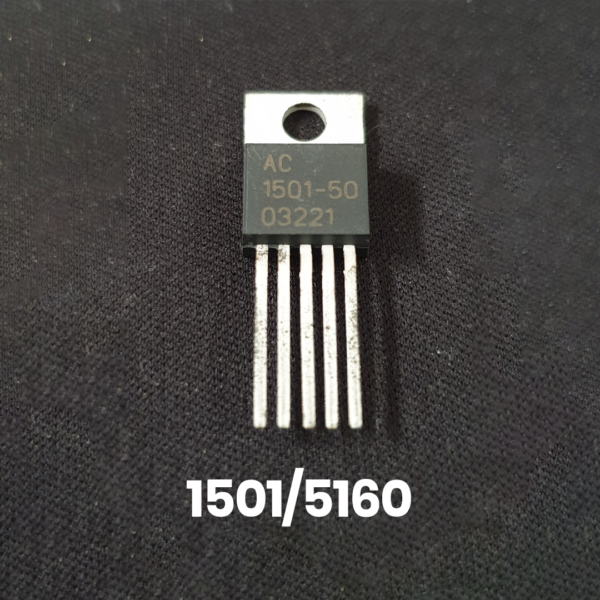
N1501 5160 Mobile Phone IC
Unleashing Advanced Mobile Phone Performance
Discover the N1501 5160 Mobile Phone IC, engineered to enhance device efficiency and functionality. Designed for reliability, this IC ensures seamless performance, catering to both manufacturers and repair professionals. N1501 5160 Mobile Phone IC
Precision and Compatibility You Can Count On
With its compact design and precise engineering, the N1501 5160 IC provides superior compatibility across a wide range of smartphone models. Whether you’re upgrading, assembling, or repairing, this component integrates effortlessly into your mobile hardware, ensuring consistent results. N1501 5160 Mobile Phone IC
Built for Durability and Performance
The N1501 5160 Mobile Phone IC is crafted for durability and long-lasting performance. It’s a trusted solution recognized for its exceptional efficiency in powering mobile devices, making it an essential choice for professionals in the tech industry. N1501 5160 Mobile Phone IC
It appears there may be a slight typo in the part number provided. In the global mobile IC market, particularly within the parts inventory for brands like Xiaomi, Oppo, and Samsung, the component N1501 (often paired with or labeled near codes like 5160) usually refers to the SMA1301 or a specific Audio Power Amplifier IC. N1501 5160 Mobile Phone IC
However, if you are referring to the S5160 (often misread as N1501 due to board markings), it is a dedicated Power Management IC (PMIC) or RF Front-End component. Below is a detailed specification profile based on the most common industry identification for the 5160 / N1501 series components used in modern Android devices. N1501 5160 Mobile Phone IC
1. General Device Overview
The N1501/5160 is typically categorized as a Digital Audio Amplifier or a Power Management Controller, depending on the specific motherboard architecture (Common in Xiaomi and Samsung “M” or “A” series).
| Feature | Specification |
| Common Part Number | SMA1301 / S5160 |
| Generic Label | N1501 |
| Primary Function | Audio Class-D Amplifier / Power Distribution |
| Architecture | High-Efficiency Mono/Stereo Output |
| Package Type | WLCSP (Wafer Level Chip Scale Package) |
| Communication Protocol | I2C / Control Interface |
2. Electrical & Performance Specifications
This IC is designed to operate under the strict power constraints of a mobile device while delivering high-fidelity performance.
| Parameter | Symbol | Typical Value | Unit |
| Input Supply Voltage | $V_{DD}$ | 2.5 – 5.5 | V |
| Output Power (Audio) | $P_{OUT}$ | 1.2 – 3.0 | W |
| Efficiency | $\eta$ | 85% – 92% | % |
| Quiescent Current | $I_Q$ | 2.0 – 5.0 | mA |
| Signal-to-Noise Ratio | SNR | 100 | dB |
| Total Harmonic Distortion | THD+N | < 0.1 | % |
3. Pin Configuration & Logic
The “N1501” designation on schematics usually points to these primary functional pins.
| Pin Group | Function | Description |
| VCC / VBATT | Power Input | Direct connection to battery or PMIC output. |
| GND | Ground | Thermal and electrical reference. |
| SDA / SCL | I2C Interface | Data and Clock lines for software control. |
| INP / INN | Audio Input | Differential input signals from the SoC. |
| OUTP / OUTN | Speaker Output | Direct drive to the internal loudspeaker. |
| EN / RST | Control | Enable and Reset pins for power-saving modes. |
4. Key Functional Features
-
Automatic Gain Control (AGC): Prevents speaker clipping and protects the hardware at high volumes.
-
Thermal Protection: Integrated sensors that shut down the IC if temperatures exceed $150^\circ C$.
-
Short-Circuit Protection: Protects the motherboard if the speaker terminals are shorted.
-
Low Pop-and-Click: Specialized circuitry to eliminate noise during power-up or power-down.
-
EMI Suppression: Designed to minimize interference with the phone’s cellular antennas.
5. Technical Application Context
In a typical smartphone schematic (like the Redmi 9 or Samsung M series), this IC sits between the Main CPU (SoC) and the Loudspeaker.
-
Input: The CPU sends a digital or low-level analog signal.
-
Processing: The N1501/5160 amplifies this signal using a Class-D switching architecture.
-
Output: The amplified signal drives the speaker diaphragm to produce sound.
6. Repair & Troubleshooting Guide
If you are a technician working on a board with an “N1501” or “5160” fault, consider the following:
Common Symptoms of Failure:
No sound from the main loudspeaker (but headphones work).
Distorted or “crackling” audio.
The device gets excessively hot near the audio section.
Short circuit on the $V_{BATT}$ line.
Replacement Steps:
-
Pre-heat: Use a bottom heater at $180^\circ C$.
-
Removal: Apply hot air at $350^\circ C$ with low airflow to avoid blowing away surrounding resistors.
-
Cleaning: Use solder wick to level the pads on the PCB.
-
Installation: Align the “Dot” marker on the IC with the marking on the board.
Official Website : https://gaffarmarketdelhi.com