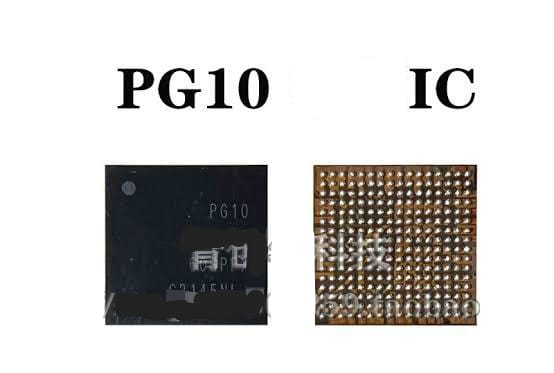
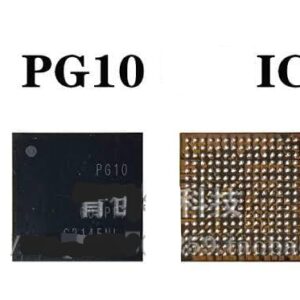
PG10 Mobile Phone IC
Unleashing the Power of PG10 Mobile Phone IC
The PG10 Mobile Phone IC is thoughtfully designed to enhance the efficiency and reliability of your mobile devices. Engineered with precision, this integrated circuit ensures seamless performance, offering high-speed processing and consistent functionality. Empower your mobile devices with technology built to meet modern demands. PG10 Mobile Phone IC
Exceptional Features for Unmatched Performance
Built with cutting-edge technology, the PG10 Mobile Phone IC boasts superior connectivity and energy efficiency. Its compact size and versatile compatibility make it an ideal choice for a wide range of mobile applications. Whether you’re upgrading your existing device or designing a brand-new system, the PG10 IC provides the perfect solution for optimized performance. PG10 Mobile Phone IC
Why Choose PG10 Mobile Phone IC?
Choose the PG10 Mobile Phone IC for its proven reliability and advanced engineering. From providing faster processing speeds to reducing power consumption, this IC is indispensable in ensuring top-tier performance. Take the next step toward innovation by integrating the PG10 IC into your devices today. PG10 Mobile Phone IC
The PG10 is a highly versatile Power Management Integrated Circuit (PMIC) widely utilized in modern mobile repair and electronic design. Primarily found in smartphones (such as Xiaomi, Google Pixel 7/8, and Huawei models) and high-performance mobile platforms, it serves as a critical regulator for multi-phase voltage delivery. PG10 Mobile Phone IC
Below is the detailed technical breakdown and specifications for the PG10 IC. PG10 Mobile Phone IC
📱 PG10 IC Technical Specifications
| Feature | Specification |
| Component Type | Power Management Integrated Circuit (PMIC) / PWM Controller |
| Primary Function | Multi-phase DC-to-DC conversion and power sequencing |
| Input Voltage Range | $4.5\text{V} \text{ to } 28\text{V}$ DC |
| Continuous Output Current | Up to $1.5\text{A}$ |
| Peak Current Support | Up to $30\text{A}$ (across multi-phase configurations) |
| Switching Frequency | $500\text{ kHz}$ |
| Feedback Reference Voltage | $0.8\text{V} \pm 1\%$ |
| Quiescent Current | $18\mu\text{A}$ (Standard) / $0.1\mu\text{A}$ (Deep Sleep/Shutdown) |
| Efficiency (Light Load) | $\approx 87\%$ (at $10\text{mA}$ load) |
| Package Types | SOT-23-6, DFN-6, or BGA (Model dependent) |
| Operating Temperature | $-40^\circ\text{C} \text{ to } +125^\circ\text{C}$ |
| Thermal Shutdown | Initiates at $150^\circ\text{C}$ |
| Communication Protocol | SMBus / $I^2C$ (PMBus commands for mobile SoCs) |
🔍 Key Features & Functional Overview
The PG10 belongs to a family of chips (PG10–PG15) known for their pin-to-pin compatibility and high reliability in mobile environments.
1. Power Sequencing & Regulation
The PG10 manages the “boot-up” sequence of a smartphone. It ensures that the CPU, RAM, and internal storage receive power in the correct order to prevent latch-up or data corruption. It often handles the 3.3V and 1.8V rails crucial for analog sensors and microcontrollers.
2. High-Efficiency Battery Management
With a standby current of only $18\mu\text{A}$, the PG10 is optimized for “always-on” mobile features. Its fast transient response (settling $12\%$ quicker than older models like the PG13) makes it ideal for devices that frequently wake from sleep to transmit data, such as GPS or 5G modules.
3. Safety and Protection
-
Over-Current Protection (OCP): Limits current to prevent motherboard traces from burning during a short circuit.
-
Thermal Protection: Automatically throttles or shuts down if the internal die temperature exceeds $150^\circ\text{C}$.
-
Voltage Stability: Provides a tight $\pm 1\%$ reference, ensuring that sensitive silicon components aren’t exposed to “ripple” noise.
🛠️ Applications in Mobile Repair
The PG10 is frequently encountered by technicians in the following scenarios:
-
Smartphone PMIC Replacement: Used in flagship devices like the Google Pixel 8 and various Xiaomi high-end models.
-
Laptop VRM Repair: Acts as a PWM controller for 8th Gen Intel mobile platforms (e.g., Core i7-8550U), managing the multi-phase power delivery to the CPU.
-
Automotive OBD-II Tools: Its wide input range ($4.5\text{V}–28\text{V}$) allows it to survive the $12\text{V}–16\text{V}$ surges typical in vehicle electronics.
Note to Technicians: When replacing a PG10, ensure the compensation capacitor ($C_{comp}$) is between $3.3\text{nF}$ and $10\text{nF}$. Using a high-ESR capacitor can lead to voltage instability and “reboot loops.”
📊 Comparison: PG10 vs. PG11 vs. PG13
| Metric | PG10 | PG11 | PG13 |
| Max Output | $1.5\text{A}$ | $1.2\text{A}$ | $1.5\text{A}$ |
| Frequency | $500\text{ kHz}$ | $450\text{ kHz}$ | $500\text{ kHz}$ |
| Standby Current | $18\mu\text{A}$ | $22\mu\text{A}$ | $25\mu\text{A}$ |
| Main Advantage | Best Efficiency | Cost-Effective | High Peak Load |
More Products : https://gaffarmarketdelhi.com