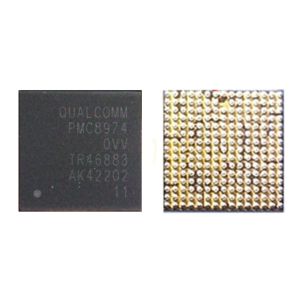
PM 8974 Mobile Phone IC
Experience Precision and Efficiency
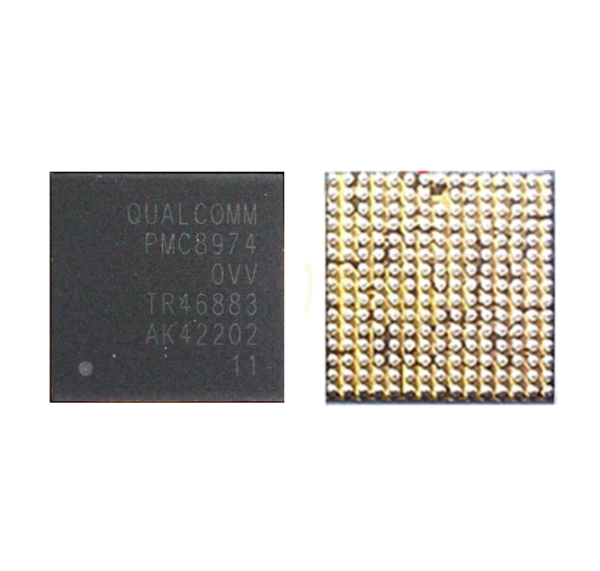
The PM 8974 Mobile Phone IC is engineered to deliver unmatched stability and precise performance to power your mobile devices seamlessly. Its advanced design ensures reliable functionality, making it an essential component for today’s high-performance smartphones and other portable gadgets. PM 8974 Mobile Phone IC
Innovative Technology for Modern Demands
Built with state-of-the-art technology, this IC integrates effortlessly into your device, enhancing operational efficiency. Designed for consistent energy management, it prevents overheating and ensures prolonged battery life, contributing to a smoother user experience.
Reliable Quality You Can Trust
Recognized for its superior quality and durability, the PM 8974 Mobile Phone IC is ideal for manufacturers, repair technicians, and enthusiasts looking for dependable, high-quality components. Whether building new devices or replacing existing parts, this IC delivers unparalleled results. PM 8974 Mobile Phone IC
The PM8974 is a high-performance Power Management Integrated Circuit (PMIC) developed by Qualcomm. It is specifically designed to work alongside the Snapdragon 800 and 801 series processors, which powered many flagship smartphones like the Samsung Galaxy S5, LG G3, and Sony Xperia Z3. PM 8974 Mobile Phone IC
As the “heart” of the phone’s power system, it manages the complex task of taking raw battery voltage and converting it into precise, regulated power for various hardware components. PM 8974 Mobile Phone IC
Core Specifications Table
| Feature | Specification / Detail |
| Manufacturer | Qualcomm |
| Model Number | PM8974 (Commonly paired with MSM8974 SoC) |
| Function | Multi-channel Power Management Unit (PMU) |
| Input Voltage Range | Typically 3.2V to 4.4V (Standard Li-ion range) |
| Output Channels | Multiple Buck Converters (SMPS) and LDO Regulators |
| Buck Converters | 6 to 7 high-efficiency switching regulators |
| LDO Regulators | 20+ Low-Dropout regulators for noise-sensitive circuits |
| Interface | SPMI (System Power Management Interface) / I2C |
| Packaging | BGA (Ball Grid Array) – High pin density |
| Key Support | Qualcomm Quick Charge 2.0 (integrated support) |
Key Technical Capabilities
1. Voltage Regulation (Buck & LDO)
The PM8974 utilizes Switching Mode Power Supplies (SMPS), or “Bucks,” for high-current components like the CPU and GPU. These are highly efficient (often >90%) to minimize heat. For noise-sensitive components like the camera sensor and audio DAC, it uses Low-Dropout (LDO) regulators, which provide “cleaner” power but at slightly lower efficiency.
2. Battery & Charging Management
This IC integrates a sophisticated battery charging controller. It monitors the battery temperature via a thermistor and manages the charging profile (Constant Current/Constant Voltage). It was one of the first PMICs to facilitate Qualcomm Quick Charge 2.0, allowing for much faster charging speeds than traditional USB 5V charging.
3. Power Sequencing
When you press the power button, the PM8974 ensures that the phone’s components turn on in the correct order. For example, the memory (RAM) must often be powered before the CPU attempts to read data. This “sequencing” prevents system crashes and electrical damage.
4. Thermal & Safety Protection
The IC contains built-in sensors for:
-
Over-Voltage Protection (OVP): Shuts down if input power is too high.
-
Thermal Shutdown: Cuts power if the IC itself or the battery exceeds safe temperature limits.
-
Short-Circuit Protection: Detects if a component has failed and is drawing excessive current.
Common Usage in Mobile Repair
In the repair industry, a faulty PM8974 is often the cause of a “Dead” phone—a device that won’t turn on or charge even with a new battery.
| Symptom | Relation to PM8974 |
| Short Circuit | Often caused by a blown capacitor on one of the PM8974’s output rails. |
| Overheating | Usually indicates the IC is working too hard due to a secondary component failure. |
| Charging Issues | If the phone shows “charging” but the percentage doesn’t rise, the PMIC’s charging logic may be damaged. |
More Products : https://gaffarmarketdelhi.com