PMB 6826 Mobile Phone IC
Introducing the PMB 6826 Mobile Phone IC
Maximize the efficiency and performance of your mobile devices with the PMB 6826 Mobile Phone IC. As a cutting-edge integrated circuit designed specifically for mobile phones, it offers reliability, durability, and seamless compatibility with modern devices. Whether you’re enhancing existing models or developing innovative applications, this IC ensures exceptional quality and robust functioning to meet your technological needs.
Advanced Features for Revolutionary Performance
The PMB 6826 IC is engineered with precision to deliver outstanding results. It supports efficient data processing, optimal power utilization, and a streamlined connection interface. With its compact design, this IC is perfect for devices striving for minimalistic elegance while maintaining unparalleled performance. Additionally, it is built with durability in mind, ensuring long-term operational stability even under intensive use.
Applications and Versatility
The PMB 6826 Mobile Phone IC is ideal for application in a wide range of mobile phones, from consumer smartphones to high-functioning industrial devices. Its adaptability ensures compatibility across various hardware architectures, paving the way for developers and engineers to integrate it seamlessly into their designs. With rigorous testing and certifications, you can trust its performance across multiple environments and conditions. PMB 6826 Mobile Phone IC
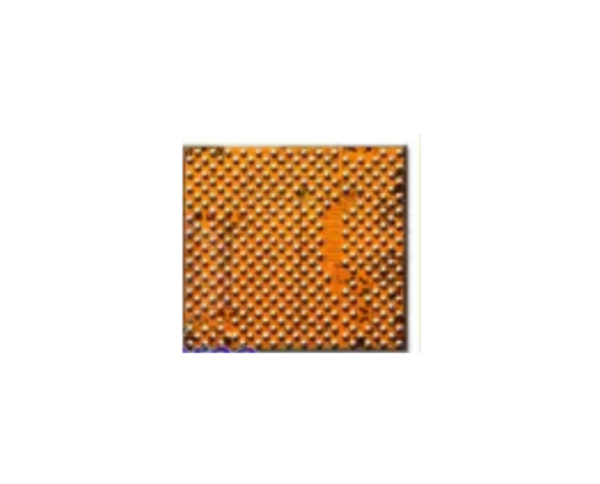
The PMB 6826 (often referred to in technical schematics as the XMM6260 platform transceiver) is a highly integrated Radio Frequency (RF) transceiver chip developed by Infineon (later acquired by Intel). It was a cornerstone of the 3G smartphone era, powering iconic devices like the iPhone 4s and various Samsung Galaxy models.
Its primary role is to act as the bridge between the digital processor and the physical airwaves, handling the complex translation of data into radio signals and vice versa.
Core Architecture and Functions
The PMB 6826 is designed to handle multi-mode and multi-band communications. This means it allows a single mobile device to switch seamlessly between different types of networks (like GSM, EDGE, and WCDMA/HSPA+) depending on signal availability. PMB 6826 Mobile Phone IC
1. Signal Transmission (TX)
When you send a text or make a call, the PMB 6826 receives digital data from the Baseband Processor. It converts this digital signal into an analog format and modulates it onto a high-frequency carrier wave. PMB 6826 Mobile Phone IC
-
Direct Conversion: It typically uses a direct-conversion (Zero-IF) architecture, which eliminates the need for bulky intermediate filters, allowing for a slimmer phone design.
-
Filtering: It cleans the signal to ensure it doesn’t interfere with other frequencies, adhering to strict international telecommunications standards. PMB 6826 Mobile Phone IC
2. Signal Reception (RX)
On the flip side, the chip picks up incredibly faint signals from the air via the antenna.
-
Low Noise Amplification: It amplifies these weak signals without adding significant “noise” (interference).
-
Demodulation: It strips away the radio frequency to extract the raw data, which is then passed back to the processor to be turned into audio or web content.
Technical Highlights
The PMB 6826 was revolutionary for its time due to several key factors:
-
HSPA+ Support: It supported “4G-like” speeds on 3G networks, allowing for download rates of up to 21 Mbps. This was the peak of 3G technology before LTE became the global standard.
-
Power Efficiency: Mobile ICs must be extremely power-efficient to preserve battery life. The 6826 utilizes advanced CMOS technology to minimize “leakage” current when the radio is in standby.
-
Integration: By combining the transceiver for multiple bands into a single CMOS chip, manufacturers saved significant “real estate” on the Printed Circuit Board (PCB), allowing for larger batteries or thinner device profiles.
The Role in the RF Front-End
While the PMB 6826 is the “brain” of the radio system, it does not work alone. It sits at the center of the RF Front-End, coordinating with:
-
Power Amplifiers (PA): To boost the signal enough to reach a cell tower miles away.
-
Duplexers/Filters: To separate outgoing and incoming signals so they don’t collide.
-
Power Management IC (PMIC): To ensure the transceiver receives a steady, clean voltage.
Note for Technicians: If a device has a “No Service” issue or “Searching” indefinitely despite a valid SIM, the PMB 6826 is often a primary suspect. Because it is a BGA (Ball Grid Array) chip, it is sensitive to physical drops which can crack the microscopic solder joints beneath it.
Legacy and Impact
Although the industry has moved toward 5G and highly integrated System-on-Chip (SoC) designs where the modem and transceiver are often on the same die, the PMB 6826 remains a classic study in RF engineering. It proved that high-speed data and global roaming could be achieved in a low-power, compact footprint.
More Products : https://gaffarmarketdelhi.com